
It’s a funny thing, time. When it comes to work, we tend to measure things in terms of what needs doing on a daily or weekly basis. Reviews are done on a yearly cycle. In comparison, changes in a landscape unfold over centuries, not mere years. The slow growth of forests and the carving of rivers move at a pace almost imperceptible to human observation.
That is why Wilder Doddington is a 100-year project and why Claire and James Birch, the owners of the estate, talk about a 400-year vision that extends as far in front of us as the history stretches back behind us, to 1595 when the Hall was built.
Wilder Doddington is a hugely ambitious project to bring more nature back to the estate. A bold decision was taken and almost four years ago, in 2021, the last harvest brought an end to conventional farming. It was becoming increasingly hard to keep the farm profitable in the face of declining subsidies and Claire was convinced that there was a better way that would still produce food but put nature at the heart of it all.

Rewilding is not new as a concept but it is fair to say that as a conservation tool, it’s time has very much come. The idea is relatively simple – putting back missing components such as large herbivores and then stepping back and letting nature lead the way in restoring naturally functioning ecosystems. Where traditional nature reserve management focusses on outcomes – such as how many pairs of a certain species are present, rewilding focusses more on the process, and the outcomes are dictated by where nature itself chooses to go.
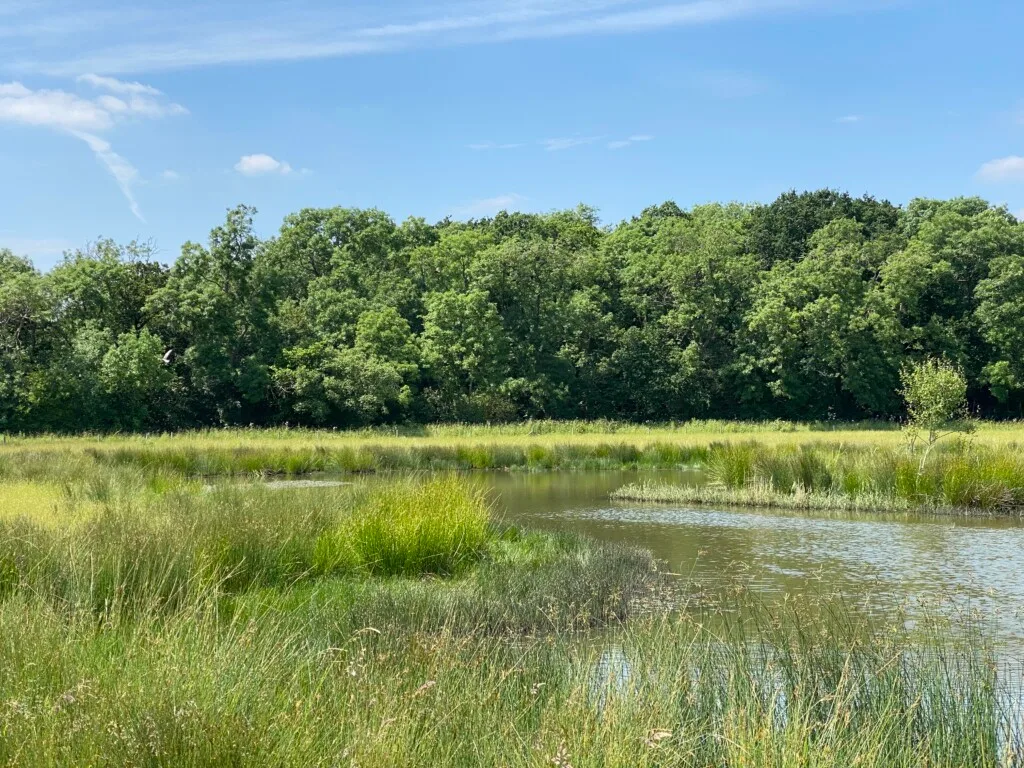
At Doddington, we occupy something of a middle ground. We have historical evidence, going back to the Domesday Book, that tells us what used to exist on the site. And existing habitats, soil types and the way we graze the land mean that in 100 years, we may have wood pasture in parts and something more akin to heathland in others. Most of this will develop at its own pace but given the current climate and biodiversity crises, we are not afraid to intervene where we think it is needed. Some species will arrive very quickly and on their own. For others, we may need to provide a helping hand and kick start some of the processes. We have, for example, spread locally sourced wildflower seeds to speed their establishment and we are in the middle of blocking some ditches and drains to allow a wetter landscape that holds more wildlife but also reduces the risk of flooding elsewhere by keeping water on the estate for longer.

And when it comes to grazing, our land is being shaped by processes that mimic the wild herbivores that would have roamed the land thousands of years ago. But instead of wild boar, aurochs and tarpan, we have Mangalitza pigs, wild Exmoor ponies and Lincoln Red cattle.
Almost four years on, the changes are astonishing. We have been amazed at how quickly nature can recover if you let it. Already our fields have been transformed from the flat, intensively cultivated land. Rougher edges, patches of bramble, sapling trees and the first wildflowers are all starting to appear. New areas of wetland have been created and the pigs, ponies, cattle and deer are all shaping the land through their grazing, rootling and trampling.


And the wildlife has responded in kind. The new wetland has been full of Snipe this winter and a Marsh Harrier has been seen quartering the marshy areas, looking for prey. As spring approaches, you can’t go anywhere without hearing the song of a Skylark and the hedgerows are full of Yellowhammers. Red Kite are still scarce in this part of Lincolnshire but a pair has been resident on the estate and we are hopeful that they might stay and breed.


Slow worms are just starting to become more active after their long winter hibernation and have become something of a regular find on our summer reptile surveys. Our new ponds will suit them as well as the Great Crested Newts and rapidly expanding populations of damsel and dragonflies.
Everywhere you look, there is more and more life returning to the estate and we would love to share it with you. From general safaris to specialist walks for birds, butterflies and dragonflies, we have an ever-expanding list of events led by recognised experts in their fields. We look forward to welcoming you to an ever-wilder Doddington soon.
– Matthew Capper, Conservation Adviser, Wilder Doddington